
 Classic Tour Packages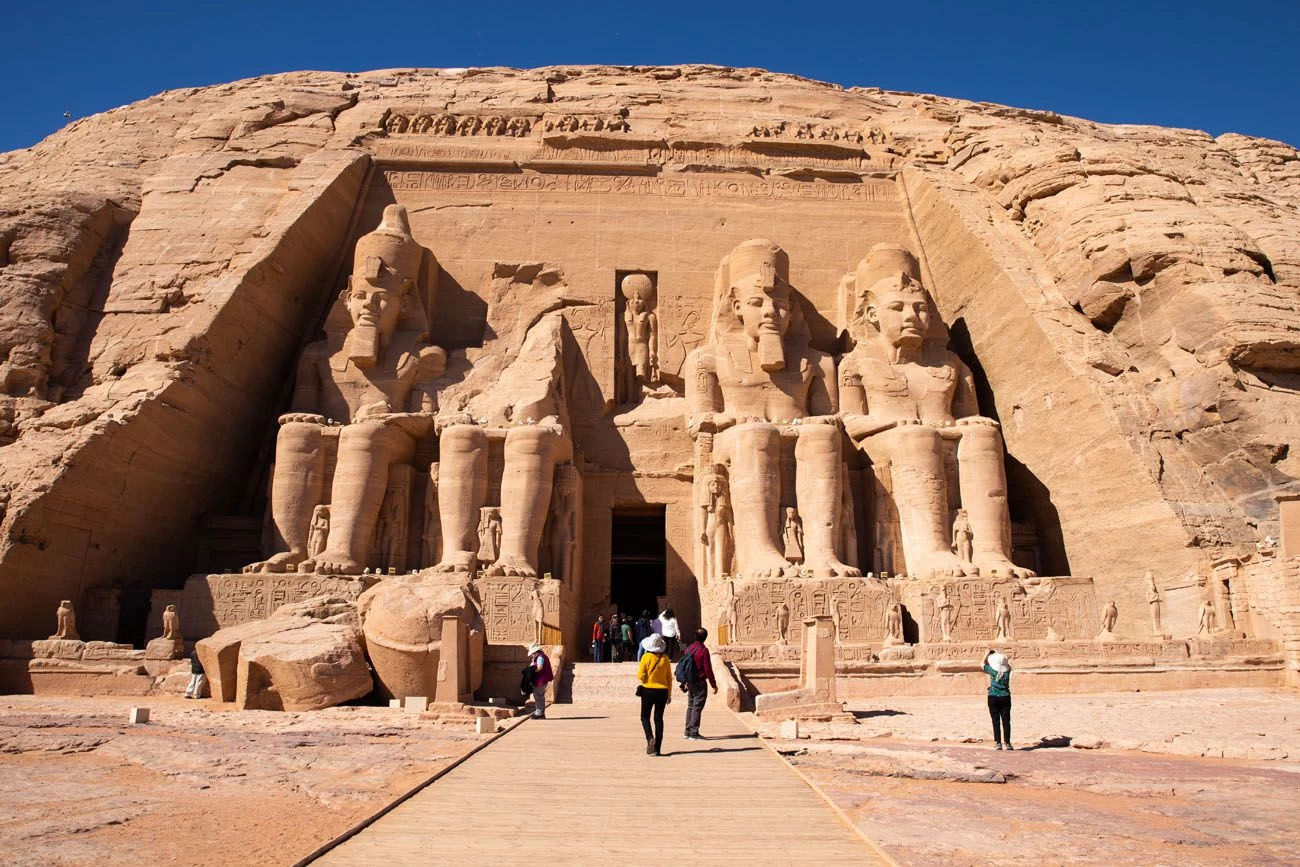
Abu Simbel: the history of the most famous Egyptian temple complex
On the western bank of Lake Nasser in southern Egypt lies Abu Simbel, one of the most important and iconic archeological sites in the country and a jewel of ancient Egyptian architecture. Erected during the reign of Ramses II in the 13th century BCE, the complex of two temples was built to celebrate his glorious rule and devotion to the gods and prove the power of the New Kingdom. Great Temple in honor of gods Amon, Ra-Horakhti and Ptah; small temple devoted to Queen Nefertari, wife of Ramses II, and goddess Hathor, and was the only ancient Egyptian temple consecrated to a queen.
The construction lasted for about 20 years and represented all the brilliance of the work of the ancient Egyptian architects and craftsmen: every detail of the work, from the colossi embedded in the mountains to the finely carved hieroglyphics, intended to express the power and relationship of Ramses II to the divine world.
The desert, in time, buried and hid from the sight of men these imposing monuments that were brought to light only in 1813; it is one of the greatest achievements of humanity and has become one of the symbols of Egypt.
Abu Simbel, a magical place to visit in Egypt
In addition to being a place with a strong historical value, Abu Simbel is a truly magical place, with a very rich cultural tradition and stunning natural beauty, which fascinates the vast number of visitors it hosts annually. As soon as you arrive, you are immediately struck by the facade of the Great Temple, where the majestic statues of Ramses II, each more than 20 meters high, guard the entrance; although one of the colossi was destroyed by an earthquake millennia ago, its remaining brethren remain a truly impressive sight for their size and the art with which they were sculpted. From inside, the visitors will find themselves in front of imposing columns, magnificent relief carvings and detailed hieroglyphics on the walls that tell the stories of battles fought by the great pharaoh and other events from the reign.
In a short walk away is another impressive monument, the Temple of Queen Nefertari, where the sculptures have a more delicate aesthetic.
Another particularity of Abu Simbel is the Sun Festival, held twice a year, during which the rising sun penetrates into the temple illuminating with its rays the statues of Ramses II, Amun and Ra-Horakhty, but not Ptah, the god of darkness. This is a clear indication of the advanced astronomical knowledge of the Egyptian people of that era.
The incredible story of Abu Simbel, one of the UNESCO's engineering wonders
One of the most fascinating parts of the history of the Abu Simbel temples is linked to their dismantling and reconstruction. When, in fact, the construction of the Aswan Dam was planned, there was the serious risk of the complete inundation of the site, due to the rise of the waters of Lake Nasser. UNESCO responded in 1960 by launching an ambitious international campaign, with the participation of dozens of engineers, archaeologists and architects from all over the world.
The project took from 1964 to 1968 and, in addition to the monumental work of dismemberment of the structures, with the cataloging of over 1000 blocks, some weighing as much as 30 tons, which were then relocated to a new position, at a height of 65 meters, and faithfully reassembled with meticulous precision to bring the temples back to their former glory.
Also recreated the artificial hill surrounding the structures in the original configuration, preserving in this way even the magic of the sun's rays, perfectly aligned twice a year, is considered one of the most beautiful engineering and archeological engineering achievements of the last century.
When and why Abu Simbel should be visited and what to know before going there
Visiting Abu Simbel is absolutely unmissable for any tourist who chooses to visit the Land of the Pharaohs, a trip that certainly deserves to be carefully planned in order to fully appreciate this wonder. To have an unforgettable experience, we recommend visiting between October and April when the temperatures are much more pleasant than during the summer months. Many prefer to take the opportunity to visit in the early hours of the morning, by land or via a short flight from Aswan, in order to be able to contemplate the monuments in the most suitable light for photography and avoiding the hot summer hours.
Light clothing, comfortable shoes and an adequate supply of water are obviously recommended for your visit, especially in the hotter months, but what should never be missing for visiting Abu Simbel is the knowledge that every corner of these temples will give you shivers!
You can hire one of the guides available on site for an even richer and more rewarding visit, who will be able to illustrate in detail all the histories and symbolism related to these magnificent architectural works. If you have the chance, consider a visit during the period of the Sun Festival: a show that you will remember for your entire life.
 Our FAQ